Timur Si-Qin b. 1984
-
-
Timur Si-Qin’s interests in the evolution of culture, the dynamics of cognition, and contemporary philosophy, weave together to create a new kind of environmental art. Taking form through diverse media, installations of 3D printed sculptures, light-boxes, websites, texts, and virtual reality, Si-Qin’s work often challenges common notions of the organic vs the synthetic, the natural vs the cultural, the human vs non-human, and other dualisms at the heart of western consciousness.
Si-Qin’s long term meta-project is the proposal of a new secular faith in the face of climate change, global pandemics, and biodiversity collapse, called New Peace. Through New Peace individual works aggregate into a hyper-distributed, branded ecosystem of signifiers. Drawing from disparate disciplines like the anthropology of religion, marketing psychology, and new materialist philosophy, Si-Qin regards spiritualities as cultural softwares capable of deep behavioral and political intervention. New Peace is thus a new protocol for the necessary renegotiation of our conceptual and spiritual relationship with the non-human. New Peace is an artwork, a church, a brand, and a memetic machine.
Timur Si-Qin (b. 1984, Germany) is a New York-based artist of German and Mongolian-Chinese descent who grew up in Berlin, Beijing, and in the American Southwest. Si-Qin was recently featured in the exhibition Science/Fiction — A Non-History of Plants at Foto Arsenal Wien, which travelled from MEP, Paris. His work has been extensively shown in solo exhibitions in Europe, the United States, and Asia, and was included in exhibitions at The High Line, New York; Schirn, Frankfurt; K11 Art, Shanghai; Musée d’Art Moderne, Paris; Ullens Contemporary Art Center, Beijing; The Center for Contemporary Art, Tel Aviv; Hamburger Bahnhof, Berlin; KW Institute for Contemporary Art, Berlin; and Kunsthalle Wien, among many others. He has participated in large-scale international exhibitions such as the Bangkok Art Biennale, Bangkok; Diriyah Contemporary Art Biennial, Saudi Arabia; Kunsttriennale Beaufort, Belgium; Riga International Biennial of Contemporary Art, Latvia; Ural Biennale, Russia; 9th Berlin Biennale, Germany; and Taipei Biennial.
Timur Si-Qin is part of a number of public collections including Sammlung des Bundes, Bonn; ICA Miami, Miami; Moderna Museet, Stockholm; Julia Stoschek Foundation, Düsseldorf/Berlin; META, New York; Zabludowicz Collection, London; Fosun Foundation, Shanghai; Saudi Ministry of Culture, Museum Commission, Riyadh; 798 Art Zone, Beijing; among others.
-
-
-
-
Selected Works
-
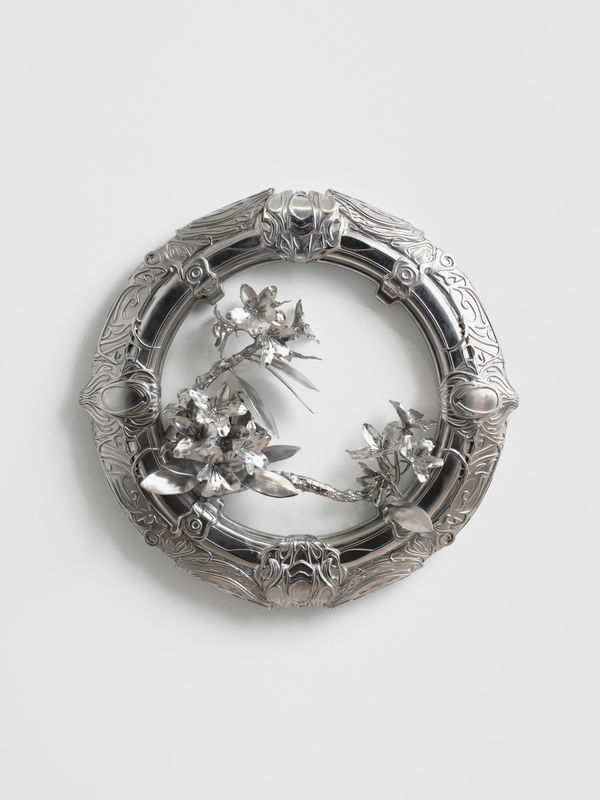
 Timur Si-Qin, Rhododendron with Epiphytic lichen (Untouchable Beauty 5), 2024
 -
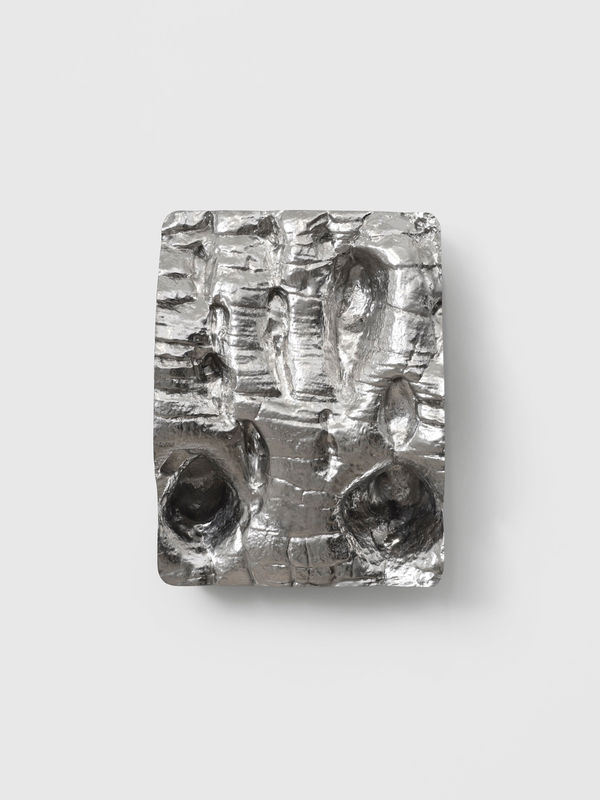
Timur Si-Qin, Embedded Kora , 2024
-
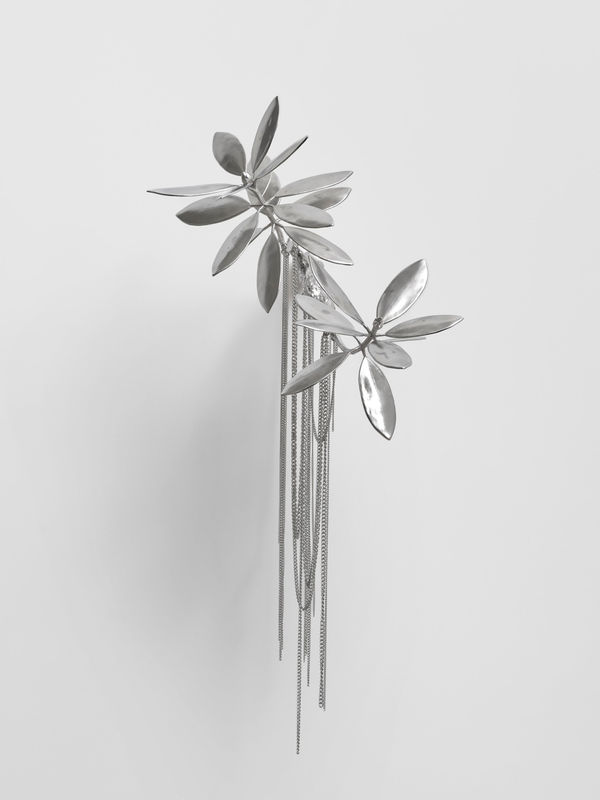
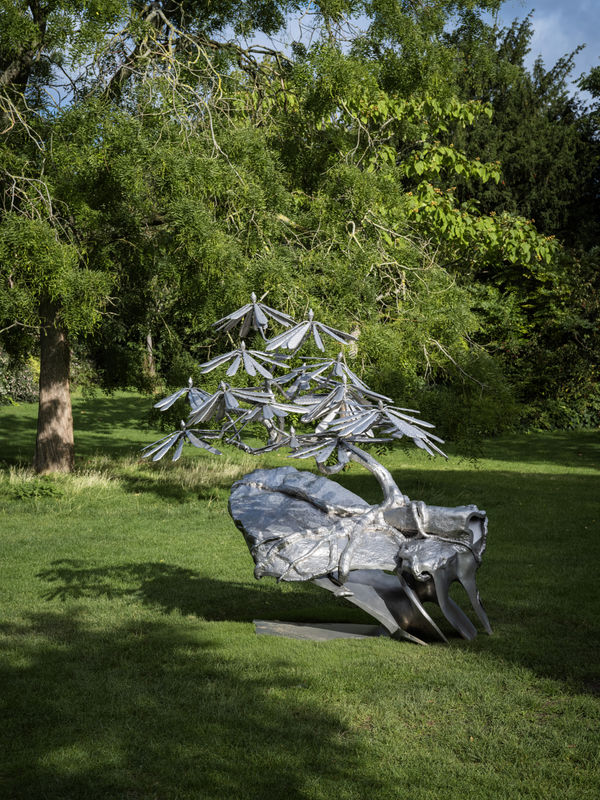
Timur Si-Qin, Deciduous Renewer (Larix potaninii), 2024
-
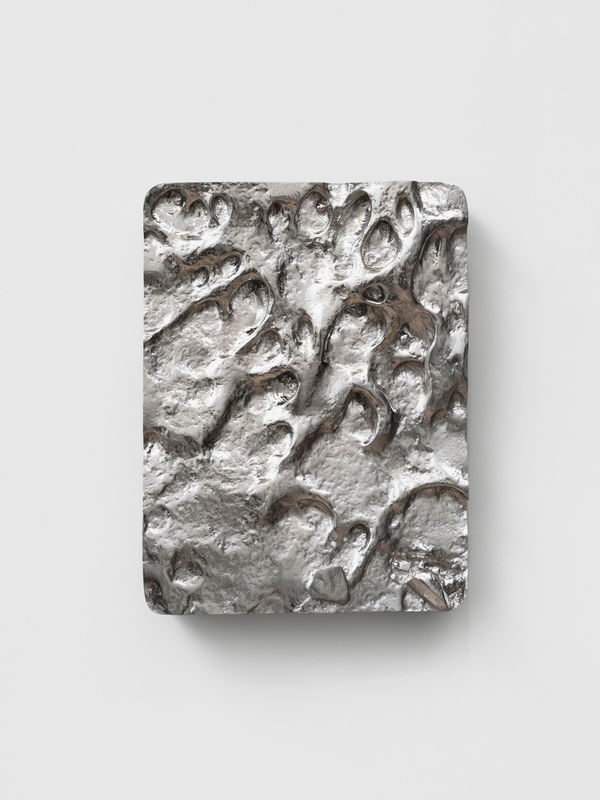
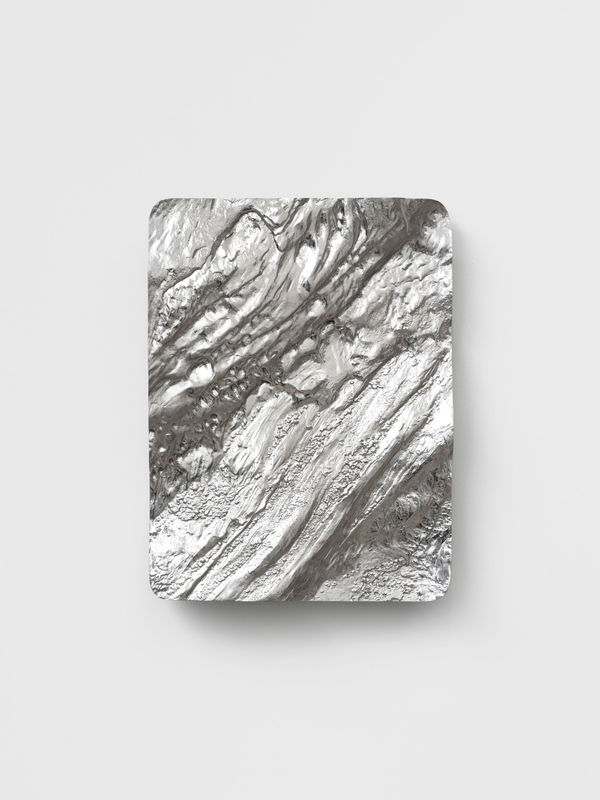
Timur Si-Qin, Sharaan Tafoni, 2024
-
-
Exhibitions
-
Past Exhibitions
-
-
Mariposita, Art Basel Unlimited, 2026
Mariposita inaugurates a new body of works engaging with the Peruvian Amazon. The work takes its title from the Spanish word for “little butterfly,” and from the blue morpho butterflies, among other species, that Si-Qin encountered during periods of isolation deep in the Ucayali region of the Peruvian Amazon. Based on 3D scans made by the artist of a Renaco tree and its surrounding pond ecosystem, the installation translates buttress roots, insects, water, plant matter, and reflected light into stainless steel and moving image at the 1:1 scale of the real tree—spanning 4.4 by 4.2 meters across the floor and rising to 2.2 meters in height, a pristine fragment of a living tree and its ecosystem, reproduced at full scale. Through its combination of sculptural and moving-image elements, the work creates a space of heightened attention in which technological reproduction becomes a devotional act: a form of mirroring, naming, and reminding viewers that such environments still exist, even as their existence is increasingly threatened.
Unlike traditional casting methods, which would require harvesting and killing the tree, Si-Qin’s 3D scanning process documents the Renaco and its ecosystem without physical harm. The scans are then 3D printed in segments in castable resin before being welded, finished, sandblasted, and polished, resulting in a translation that is at once technologically precise and ethically grounded. Despite using cutting-edge technologies to create his works, Si-Qin’s focus is on nature itself. “I’ve always felt that my work has been misinterpreted as being about technology. It has always been about nature,” Si-Qin has said. “I don’t see technology as a separate ontological category. Since we’ve made cave paintings we‘ve been using technology to make art. It’s simply what’s available.”
Si-Qin’s engagement with trees as subjects of devotional attention has been central to his practice for several years—rooted in the conviction that the displacement of nature from the center of Western spiritual life is inseparable from the environmental crisis we now face. His monumental commission Sacred Footprint (2024), permanently installed in the atrium of Meta’s New York headquarters, synthesized 3D scans of multiple tree species from the Catskills and Adirondacks into a single 50-foot suspended form in stainless steel and aluminum. Mariposita marks a significant shift in this ongoing inquiry: where Sacred Footprint draws multiple trees to construct a universal symbol, Maripositais rooted in a single, specific encounter: one tree, one pond, one ecosystem, which the artist experienced during periods of extended isolation deep in the Peruvian Amazon.
For Si-Qin, Mariposita is a meditation on the concept of the pristine. For most people in contemporary societies, truly wild places are rarely, if ever, experienced. The pristine names an encounter with living worlds so intact, vivid, interdependent, and self-generating that they can feel almost impossible from within contemporary life. As direct experiences of such ecosystems become increasingly rare, images of the pristine are often dismissed as fantastical, romantic, or merely aspirational. Yet this apparent unreality reveals how distant modern culture has become from the living systems that sustain it.
“I‘m always trying to go towards the most realistic depiction of nature because I think nature is herself the most radical,” Si-Qin explains, “For me, the process of seeing nature and trying to depict it is a meditative and devotional practice in itself.” In Mariposita, this devotional act of mirroring is both an artistic method and an ecological ethic: a gesture toward the forest spirits of the Ucayali, the fragile worlds threatened by extraction and deforestation, and the possibility of learning to walk differently within the living fabric of the earth.
This project was realized in collaboration with Magician Space and the Sigg Art Foundation.
-
-
-
-
Tide Patterns (New Peace Diptych), Artspace, Sydney, Australia, 8 May – 20 August 2025
Timur Si-Qin’s work often explores the concept of ‘New Peace’, the proposal of a post-secular faith that re-establishes the sacredness of nature in a contemporary globalised, and technologically saturated world. Through New Peace, individual works aggregate into an ecosystem of signifiers and distributed meaning systems, seeding new narratives for possible relationships with the natural world in the 21st century. Si-Qin’s New Peace series, which he began in 2016, is an evolving exploration of these ideas that astutely employ the visual language of mass-media, branding and marketing psychology. Using hyper-real renderings of wilderness merging with the impression of a familiar yet undefined logo, Si-Qin’s work challenges traditional Western dualisms between nature vs. culture, human vs. non-human, and the organic vs. the synthetic.For this Banner Series Commission Si-Qin has worked with an AI image generator to create the latest iteration of this ongoing series. In Tide Patterns (New Peace Diptych), two coastal formations appear marked by the New Peace logo, embedded into the contours of land and sea. This logo is part of an evolving visual language that proposes a new kind of spiritual and symbolic relationship with the Earth. Rather than an imposition onto the landscape, it emerges from it — a sign not to dominate nature, but to revere it and recognize ourselves as a fundamental extension of it. -
-
-
Ecotone Dawn, Kunsthalle Winterthur, Switzerland, July - September 2023
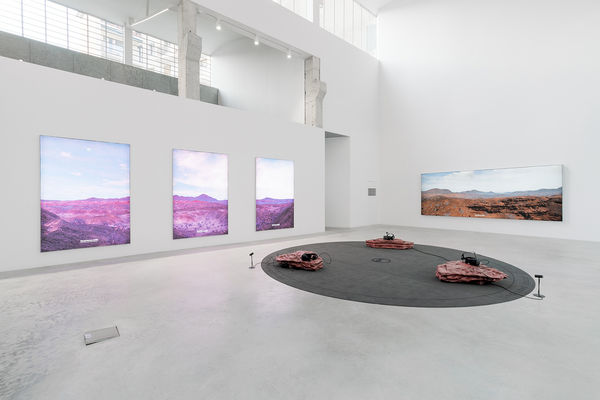
Ecotone Dawn refers to the so-called “ecotone”, which in ecology refers to the transitional zone between two different ecosystems or biotope types; typical ecotones include forest edges or shoreline zones. The nature of the actual separation or boundary can take various forms; permeability and interaction are variable, but ecotones as a whole are characterized by increased biological diversity. As hinges for interaction between bio-diverse areas, ecotones are also bridges for the affects of climate change.In the brightly lit main hall, Timur Si-Qin freezes a desert sunset in four wide-format light boxes (Sharaan Sunbreak, 2023). The images are a rendered panorama using original footage from the Saudi Arabian oasis of Al-Ula. In the centre of the space, Etching the Path to the Sea Within (2023) features a 3D-printed tree trunk that was found and photographed along a pilgrimage route in Thailand. Various messages carved into the bark by passers-by are preserved by the artist, as are the support structures necessary for stability in the making of a 3D print. Instead of removing and smoothing their evidence away, Si-Qin keeps them as part of the sculpture. The fusion of root extensions and technical support structures creates a cyborg-like hybrid, referring both to the artist’s own production and that of the natural world.The mystical atmosphere that pervades the bright main hall extends into the darkened smaller halls of the galleries. Four photographic prints from the series Natural Origin (2023) depict what appear to be a particularly dense and lush forest, but in truth, the pictures are shots from virtual cameras in a 3D rendering modelled by the artist. Derived from the flora and fauna of Upstate New York, the rendering is both a visually pleasurable composition of digitized nature, and a simulation of an entire ecosystem. The complexity leading to the bucolic image motifs is further enhanced by the projection of moving leaf shadows over the four images. -
-
-
Sacred Footprint, permanent installation at Meta, Farley Station, New York, commissioned 2022
Sacred Footprint primarily takes form from, and is rooted in, the Temperate Deciduous Forest eco-region of New York state and the greater northeast. While having supported our species for over 50 thousand years, Temperate Deciduous Forests evolved over the past 30 million years and are some of the oldest bio-communities living in the world. Their increasing vulnerability to the climate crisis makes temperate forests symbolic of the danger the living world is in."The tree is composed of many different species of trees that I encountered and 3d scanned. The different types of trees, branches and leaves that make up the sculpture represent a variety of different New York eco-regions like the stunted-conifer boreal islands, vestiges of the last ice-age that are found in New York’s highest elevations and make up the crown of the sculpture; down through high altitude yellow and paper birch hardwood; down further through lower elevation species like Red Oak and White Ash.Sacred Footprint references the mythical Tree of Life, an ancient concept that appears in many cultures, traditions, and religions worldwide. The Tree of Life traverses the heavens, the earth, and the underworld and represents the interconnectedness of all things. The different tree species link together into a chain, or necklace, suspended from wires above the 4-floor central atrium of Meta’s office. The interlinked trees represent the web of ecosystems and the inherent resilience of diversity as well as the literal genetic family tree of all life on earth. The helix links reference the woven and braided nature of the world, the braid of life, as found in the cosmologies of many First Nations cultures, as well as alluding to the double helix structure of DNA and the code of life.” -
-
-
Oracle of the Ashes of Plants, 3D Sculpture, Led Screen Displayed at Bangkok Art and Culture Centre, Bangkok ART Biennale, 2021
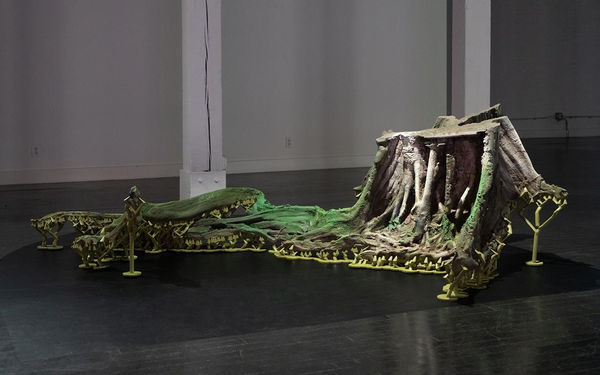
In the Oracle of the Ashes of Plants, Si Qin explores the relationship that humans have with nature throughout the Millenia. After visiting an archeological site in the mountains of Romania, he came across limestone dwellings that date back to the Neolithic era. One temple sat atop a steep hill in a beech forest, cut into a stone cliff, the landscape had been modified by diverse cultures and settlements marking thousands of years of use and adaptation. At the entrance was the stump of an enormous ancient spruce tree, to the artist it felt almost theatrically staged, symbolic of the state of the natural world in 2020. Oracle of the Ashes of Plants is the 3D-scanned remains of this tree. The stump is augmented, supported by a generated structure as well as sections of smooth geometric artificing and interpolation. The tree is orbited by a curved LED video that depicts its original environment. The work explores the anthropocentric mindset that characterizes humanity's domination of the natural world.
-
-
-
Take Me, I Love You, von ammon co, Washington DC, United States, October - November 2020
Washington DC: von ammon co featured New York based German artist Timur Si-Qin for his solo show, Take Me, I Love You by. This full-scale show was the first of its kind in the United States, and featured eleven new works by the artist, a combination of 3d printed sculptures, computer-generated landscapes and branded graphics from the artist’s meta project: New Peace. New Peace is a proposal for a new form of spirituality in the face of global pandemics, climate change, and biodiversity collapse. The legacy of agricultural religions of the West have led the world to an ecological precipice. The farming eschatology, particularly, of Christianity have promoted an extractive attitude towards nature. Westerners are raised to regard Nature as a soul-less and limitless resource for humans, to use and to hold in dominion—as given by God.On the other hand the global Indigenous worldview has always recognized Nature as inherently alive, intelligent, symbiotic, and sacred. As the ecological consequences of climate change intensify, it is the global Indigenous worldview, rather than the Western one, that is being revealed to have been the more rational one all along. Spirituality and religion are some of the most powerful forces shaping human culture and behavior. New Peace is an artwork in the form of a campaign to to articulate a spirituality of symbiosis for the 21st century.New Peace comprises four modules or ideas. These concepts are possible sources for basing a contemporary spirituality today. The iconography of each source is represented in acrylic and 3d printed sculptures in the exhibition. The Undivided Ground is the idea that all are one, also known as the concept of immanence. Faith in Pattern is the idea that faith can be derived from the patterning of matter and reality itself. Pray to Scale is the idea that the scale and age of the universe itself is the higher power that we can connect with. Purpose from Difference is the idea that matter exists to experience every version of itself. The meaning of the universe is diversity itself. Take Me, I Love You is both the attitude of causal, material, nature herself as well as a prayer to her. While nature has been a selfless mother to humanity and will continue to give of herself, this declaration must be reciprocated by humankind. -
-
-
East, South, West, North, Magician Space, Beijing, China, November 2018 - March 2019
Magician Space presented a second solo exhibition for artist Timur Si-Qin. In this show, New York-based German artist Timur Si-Qin continued his development of New Peace, a secular spirituality for the 21st century. Identifying the dualistic legacy of agricultural society and religions as maladaptive for our contemporary world, New Peaceargues for a re-enchantment with matter as the necessary basis for confronting the material problems of our times. The title East, South, West, North is a reference to the sacred circle of the four directions, a primary spiritual concept in pre-agrarian/hunter gatherer religions of Central Asia and Americas. With this Si-Qin signals both a return to and necessary upgrade of our spiritual orientation and dimensionality.In the white paper for New Peace entitled A New Protocol, the artist points out that religions are themselves technologies of belief. Protocols for human behavior towards one another and their environments. However, today the spiritual vs material dualism inherent to agricultural society and religion has become a maladaptive constraint that prevents us from adequately conceptualizing our connection to, and impact on, the non-human world. The response is a new secular spirituality of matter and an elucidation of a non-human ethics of difference.Influenced by currents of New Materialist philosophy that challenge the anthropocentric privileging of the human subject since the beginning of his practice, Si-Qin seeks a spiritual and intellectual reconceptualization in which the material is recognized for its inherent dynamism and creative potentiality. A plane of immanence on which animals, plants and other organisms are recognized as being connected to and on equal ontological footing with the human, in many ways resembling the pre-agrarian cosmologies.In this “radical immanence”, when the interconnected oneness of reality is recognized, the fractal patterning, movement, and infinite creativity of matter are elevated to the sacred. Within “infinite difference”, the ceaseless variation and differentiation of matter attests to an irreducible and open ended universe. New Peace breaks with the illusion of the separation between human and nature, but it also provides a new channel for appropriate reflection on and effective intervention in the reality of the world, such as climate change and retrogressive political life.The ritual practice of New Peace, like a sacred circle, draws on many different patterns, whether artworks or physical architecture on the earth. In the exhibition, a group of all-new sculpture works made of crab, shell, tree, and other beings the artist had encountered and 3d scanned become the agents and participants of a new ritual and space of worship. Here, the artist attempts to awaken an older animal power, tracing the relationship between human and animal back to a more primal connection. This move is echoed by digitally rendered landscapes in lightboxes and VR, which further point towards the dissolution of the nature/culture divide. The dialogue between the artist and a diverse array of materials, whether stones, lighted advertisements, digital images, or machines, is not only limited to aesthetic forms and considerations, but on a deeper level, this dialogue advocates for the independent, open consideration of culture as an emergent manifestation of matter. As various outmoded boundaries wear away, a collapse of the dualities of nature and culture, synthetic and organic, subject and object precipitates the question of how should art reconstruct subjectivity, consciousness, and morality within the material. New Peace is Si-Qin’s attempt to provide a potential path and personal resources for humanity to re-orient itself in an age of cataclysmic change. -
-
-
Forgiving Change (Agora - High Line Art, Gallery Weekend Beijing), Agora at High Line, New York, United States, April 2018 - March 2019
Timur Si-Qin participated in Agora, a group exhibition that looked at the role of art in defining, creating, and using public space, taking place at various locations along the High Line. The exhibition takes its name from the ancient Greek word referring to the square, that public gathering area that was, in old city-states like Athens, the core for commercial, artistic, political, and spiritual life of the city. For centuries, artists have used public locations – and the public in general – as sites and actors for their work. Transforming these places into theatres and arenas for the realization of performances and collective actions, artists mobile a kind of collective voice of the people. Through these collective actions, and the manipulation of our expectations of what does and does not belong in these ostensibly collectively owned spaces, they challenge what these spaces are, how they’re made, and who they’re made for. From single speaker’s corners to sprawling protests; from grand parades and processions to performances carried out in secrecy; from bronze historical equestrian statues to initials etched on edges of pavement; and from WPA murals to graffiti tags, the forms artists’ works take in the public space vary widely in scale, volume, and form. However, across time they share common themes: challenging why and how public and private space, life, and activities are separated; how boundaries and drawn, built, and transgressed; who is allowed to stand and speak, and where.
The exhibition looked at the power of art to change society, what the role is of art in public space, and whether art be a form of protest. Artists working in public often take a political tone, mobilizing the public for social and political change, and for the possibility of realizing an alternate future. On the High Line, a public space and natural platform for the projection of voices into urban space, nine artists share their experiences inhabiting, speaking out it, and challenging the assumed boundaries of public space.
-
-
-
Land of the Lustrous, UCCA Dune, Beidaihe, curated by Yang Zi, 2019
The proposition that stone “is alive” results in several ancillary questions – is humankind the measure of the universe? Is it shortsighted to base values solely on human needs, universalizing our limited ways of understanding the world? As urbanization and modernization progress, will such nearsighted forms of knowledge bring about a corresponding rise in alienation? After all, only humans can consume, produce, and create surplus value in the world of capital; in this game, “nature” can serve only as dead material. Timur Si-Qin and Su-Mei Tsestrive to imagine models and rubrics that are separate from “nature itself.” Si-Qin’s Juniper, produced in 2019, is a kind of billboard for the Anthropocene, advertising the spatial and temporal concepts attendant to this new epoch.
In Juniper, Si-Qin uses 3D printing technology to recreate the juniper tree that grew near Georgia O’Keeffe’s residence in Ghost Ranch, New Mexico. In this work, viewers can see a riotous growth of various local fauna. The work also foregrounds the concept of New Peace: a new relationship between humans and nature that draws its formal appeal from the language of advertisements. Encountering this piece, viewers are reminded of creation myths that do not accord with science, in which a life is conceived from, nourished by, and born of innate matter.
-
-
Excerpt from Heaven is sick an essay by Timur Si-Qin, 2020
-
Press
-
An Amazonian tree becomes a monumental steel sculpture at Art Basel
Domus MagazineAlessia Baranello , June 19, 2026 -
In a Volatile Market, Art Basel Galleries Bet on Our Attention
HyperallergicJune 17, 2026 -
6 Standout Artists to See at Art Basel 2026
ourcultureLee Sharrock, June 7, 2026 -
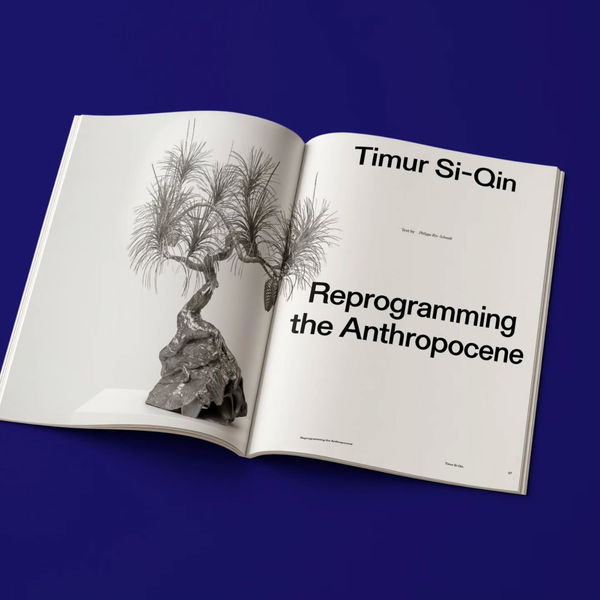
Reprogramming the Anthropocene
Refresh MagazinePhilippe Riss-Schmidt, February 23, 2026 -
Bigger and Better
Family StylePaul Laster, October 17, 2025 -
Frieze Sculpture brings shade—and light—to Regent's Park
The Art NewspaperTom Seymour, October 14, 2025 -
Timur Si-Qin's Prophetic Vision in the Shadows
Refresh MagazineRefresh Team , October 8, 2025 -
Art shows to leave the house for in December 2024
DazedAshleigh Kane, November 29, 2024 -
Timur Si-Qin, ‘Trust the River’: Reimagination of Nature & Technology
Noctis MagazineNovember 22, 2024 -
SHOWNEWS: YOUR WEEKLY ARTS BULLETIN
ShowstudioChristina Donoghue, November 20, 2024 -
Timur Si Qin solo exhibition at Albion Jeune exploring ecology, culture, and spirituality
Visual Atelier 8Dana Dimitras, November 8, 2024 -
Meet The Artists Working At The Intersection Of Art And Science
ForbesLee Sharrock, October 25, 2024 -
For Meta’s New York Office, Artists Created their Largest Works Yet. See Them Here
ARTnewsTessa Solomon, August 25, 2022 -
Meta puts analogue art front and centre in sprawling new Manhattan office
The Art NewspaperBenjamin Sutton, August 24, 2022 -
Timur Si-Qin in conversation with Mostafa Heddaya
CURA.36September 1, 2021 -
Timur Si-Qin’s Slick Brand of Environmental Art
FriezeIan Bourland, November 9, 2020 -
Timur Si-Qin
ArtforumSimon Frank, March 21, 2019 -
Timur Si-Qin’s “Campaign for a New Protocol, Part III: New Peace"
Asia Art PacificAlessandra Alliata Nobili, May 11, 2018
-